Does Your Spouse’s Bad Credit Affect Your Credit Score?
Your spouse’s bad credit does not directly lower your personal score, but joint accounts and joint loan applications can affect both spouses. Learn how to protect your credit.


Getting married combines many parts of life, including housing, household expenses, savings goals, and major financial decisions. However, marriage does not automatically combine two people’s credit scores into one score.
Your spouse’s poor credit score does not directly lower your personal credit score. Credit scores are calculated from the credit history associated with a particular individual. If your spouse has late payments, collections, high credit card balances, or other negative information on accounts that belong only to your spouse, those items generally do not automatically appear in your individual credit file.
The situation changes when you share credit.
A joint credit card, jointly signed vehicle loan, shared mortgage, co-signed debt, or another account reported under both names can affect both spouses’ credit histories. When you submit a joint loan application, the lender may review both applicants’ reports and scores. A poor score belonging to either applicant may contribute to a higher interest rate, less favorable terms, a lower approved amount, or denial of the application.
This guide explains when a spouse’s credit remains separate, when it begins affecting shared financial decisions, and how couples can prepare before applying for credit together.
Important: This article provides general educational information and is not individualized legal, lending, tax, or financial advice. Community-property laws, creditor policies, loan programs, and account agreements can affect individual situations.
Quick Answer
Your spouse’s bad credit does not directly change your personal credit score merely because you are married.
It may still affect you when:
- You apply jointly for a mortgage, vehicle loan, credit card, or personal loan
- You jointly own a credit account
- You co-sign your spouse’s debt
- You become legally responsible for a shared obligation
- You are added to an account that is reported to credit bureaus
- A lender evaluates household finances under applicable community-property rules
- Your spouse’s debt payments reduce the household income available for shared expenses
If you apply for credit jointly, the lender generally evaluates both applicants. CFPB guidance states that one applicant’s poor credit may count against the joint application and prevent the couple from receiving the best rates or qualifying at all.
Does Marriage Merge Your Credit Scores?
No.
Marriage does not create a combined marital credit score. Each spouse generally continues to have an individual credit history based on accounts reported in that person’s name.
Your score may be calculated using information such as:
- Your bill-payment history
- Your outstanding debts
- The age of your accounts
- Your available credit usage
- Your recent credit applications
- Your collections, foreclosures, or bankruptcies
- Other information in your individual credit report
The scoring model, credit bureau data, and date of calculation can all affect the resulting score. CFPB also notes that consumers do not have only one universal credit score; different models and reports can produce different numbers.
A wedding, legal name change, or shared address does not automatically transfer one spouse’s past credit accounts to the other spouse’s report.
Does Your Spouse’s Credit History Appear on Your Report?
Your spouse’s separate accounts generally should not appear on your report merely because you are married.
An account may appear on both reports when:
- Both spouses are joint borrowers
- Both are joint credit card account holders
- One spouse co-signed for the other
- One spouse is an authorized user and the issuer reports that status
- Both spouses assumed legal responsibility for an obligation
- Incorrect information caused the accounts to be mixed
If your spouse’s individual account appears on your report and you have no connection to it, investigate whether:
- You were added as an authorized user
- You signed a joint application
- The account was incorrectly classified
- The credit bureau mixed your file with another person’s
- Identity theft occurred
- The creditor has incorrect identifying information
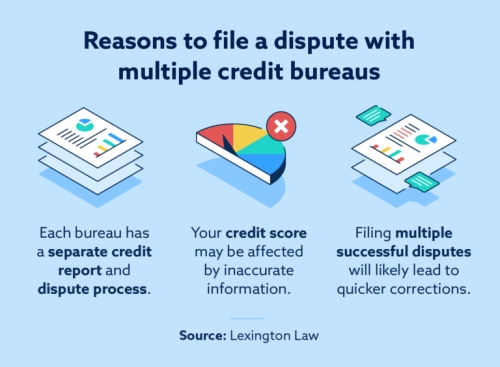
Credit report errors should generally be disputed with both the credit reporting company and the creditor or other company that supplied the information.
Can Your Spouse’s Bad Credit Affect a Joint Loan Application?
Yes.
When two spouses apply together, the lender may review:
- Both credit reports
- Both credit scores
- Both applicants’ income
- Existing monthly debt payments
- Employment and income stability
- Loan amount
- Down payment
- Assets and reserves
- Collateral
- The particular loan program’s underwriting rules
One spouse’s low score may contribute to:
- A higher interest rate
- A higher required down payment
- A lower loan amount
- Additional documentation requirements
- A request for stronger reserves
- Denial of the application
- Less favorable credit terms
CFPB states that lenders reviewing a joint application will examine both spouses’ credit scores, and one spouse’s poor score can affect the outcome for both applicants.
The lender does not necessarily average the two scores. How scores are evaluated depends on the loan type, lender, scoring model, and underwriting rules.
Example of a Joint Application
Assume:
- Spouse A has a score of 760
- Spouse B has a score of 610
- Both apply for the same mortgage
- Both incomes are needed to qualify
The lender may not base its decision solely on Spouse A’s 760 score. Because both people are applying and becoming responsible for the loan, the lender may consider Spouse B’s lower score and other credit information.
The couple might receive:
- A higher rate than Spouse A could obtain alone
- A different loan program
- A larger down-payment requirement
- A denial if the application does not meet underwriting standards
However, applying only under Spouse A may mean that Spouse B’s income cannot be used to qualify. The stronger credit profile must still have enough qualifying income and meet the lender’s other requirements.
Should the Spouse With Better Credit Apply Alone?
Sometimes an individual application produces better terms, but it is not automatically the best choice.
CFPB notes that when one spouse has poor credit, the couple may receive better loan terms by applying under the individual with the stronger credit score.
Before doing so, consider whether the individual applicant can qualify based on:
- Their own income
- Their own employment
- Their own debts
- Their credit history
- Available assets
- Required down payment
- Debt-to-income requirements
- The property and loan amount
- Applicable state law
An individual application may offer a better rate but qualify for a smaller loan because the lender may not count the non-applicant spouse’s income.
Do not omit a spouse, debt, obligation, or source of funds when the application or applicable law requires disclosure. Applying individually means using the legitimate qualifications of the individual applicant—not hiding information from the lender.
Can a Married Person Apply for Credit Individually?
Yes.
A person does not generally have to apply jointly merely because they are married. A creditor cannot deny an otherwise qualified applicant solely because of marital status.
For an individual mortgage or home-equity application, a creditworthy person can generally qualify based on their own qualifications, and the lender generally cannot require the spouse to co-sign merely because the applicant is married.
A lender may still request information about a spouse in certain circumstances, including when:
- The spouse will be responsible for the debt
- The applicant relies on the spouse’s income
- The applicant relies on alimony, child support, or maintenance income
- The applicant resides in a community-property state
- Community property is being used to repay or secure the loan
- A spouse’s signature is needed to create a valid lien or clear title
These exceptions involve legal responsibility, income, property rights, or collateral—not simply the fact that the applicant is married.
Can a Lender Require Your Spouse to Co-Sign?
Generally, a lender cannot require your spouse to co-sign individual credit when you independently qualify for the requested amount and terms.
For secured credit, the lender may require a spouse’s signature on certain documents when necessary to establish a valid security interest in jointly held or marital property. Signing a document that permits a lien is not always the same as becoming a co-borrower responsible for repayment.
Read every document carefully and ask:
- Is my spouse becoming a borrower?
- Is my spouse only acknowledging the lien?
- Will this debt appear on both credit reports?
- Is the spouse personally responsible for repayment?
- What happens if payments are missed?
- Can the creditor collect the entire balance from either spouse?
CFPB distinguishes between requiring a spouse to become responsible for a debt and requiring a signature necessary to make collateral available if the borrower fails to repay.
Do Joint Credit Cards Affect Both Spouses?
Yes.
A joint credit card account can affect both account holders’ credit scores.
The account may report information such as:
- Current balance
- Credit limit
- Payment history
- Late payments
- Account age
- Utilization
- Delinquency
- Charge-off status
- Collection activity
- Open or closed status
Positive activity may help both spouses. Negative activity may harm both.
For example, if one spouse makes a late payment on a jointly held card, the late payment may appear on both reports even when the other spouse did not make the purchase or control the payment.
Who Is Responsible for a Joint Credit Card Balance?
Each joint account holder is generally responsible for the entire balance—not merely half.
The card issuer may seek the full amount from either account holder, including charges made by the other person.
A private agreement between spouses stating that each person will pay half does not necessarily limit the card issuer’s contractual rights.
Before opening a joint account, discuss:
- Who will review statements
- Who will make payments
- What spending limits will apply
- Whether both people will receive alerts
- What happens after separation
- How the account will be closed
- Who is responsible for existing balances
Authorized User vs. Joint Account Holder
These roles are different.
Authorized user
An authorized user generally:
- Has permission to use the card
- Receives a card connected to another person’s account
- Is not normally contractually responsible for repayment
- May have the account reported on their credit file
- Can usually be removed by contacting the issuer
Joint account holder
A joint holder generally:
- Applied for or accepted the account jointly
- Is legally responsible for the debt
- Can be pursued for the full balance
- Has the account reported as a shared obligation
- May not be removable without closing or restructuring the account
Authorized-user activity can still affect the authorized user’s credit when the issuer reports the account. Reporting practices and scoring treatment can vary, and creditor reporting systems may identify both authorized users and legally liable participants.
Before adding a spouse as an authorized user, check:
- Whether the issuer reports authorized users
- Whether the account has late payments
- Whether utilization is high
- Whether the account is old and well managed
- How removal will be reported
- Whether the spouse is being made legally responsible
Can Adding a Spouse as an Authorized User Help Their Credit?
It may help when the account:
- Has a long positive history
- Has no late payments
- Maintains a low balance compared with its limit
- Is reported to the relevant credit bureaus
- Is recognized by the scoring model being used
It may also hurt when the account:
- Has missed payments
- Carries a high balance
- Is over its credit limit
- Becomes delinquent
- Is charged off
- Is inaccurately reported as a joint obligation
Adding someone as an authorized user does not erase that person’s existing negative accounts, guarantee a score increase, or guarantee loan approval.
The primary cardholder should understand that they generally remain responsible for authorized-user charges under the account agreement.
Can Your Spouse’s Separate Credit Card Balance Affect You?
It generally does not directly appear as your debt or lower your personal score when:
- The account belongs only to your spouse
- You are not a joint holder
- You did not co-sign
- You are not an authorized user
- No state-law exception makes you responsible
However, the balance may indirectly affect shared financial decisions.
For example, your spouse’s monthly debt payments may reduce:
- Household cash flow
- Savings capacity
- Down-payment funds
- Emergency reserves
- Ability to pay shared bills
- The amount affordable under a joint loan
A spouse’s separate debt can therefore affect the household without becoming part of your personal credit score.
Can Your Spouse’s Late Payment Affect Your Score?
A late payment on your spouse’s separate account should not automatically affect your score.
It may affect you when the late payment occurs on:
- A joint credit card
- A joint mortgage
- A jointly signed vehicle loan
- A co-signed personal loan
- Another account reported under both names
- An authorized-user account appearing on your report
The important question is not who physically made or missed the payment. It is whose names and legal obligations are connected to the account.
Do Joint Mortgages Affect Both Credit Scores?
Yes.
When both spouses are borrowers, mortgage activity is generally reported under both names.
Both reports may reflect:
- Original loan amount
- Current balance
- Monthly payment
- On-time payment history
- Late payments
- Loan modification
- Forbearance status
- Foreclosure
- Payoff or closure
Even if one spouse moves out, the loan generally continues affecting both borrowers until the lender formally releases one borrower, the loan is refinanced, or it is otherwise paid and closed.
A private promise that one spouse will make the payments does not by itself remove the other borrower from the mortgage contract.
Does Divorce Separate Joint Credit Accounts?
No—not automatically.
A divorce decree may state that one former spouse is responsible for a particular debt, but it does not necessarily change the creditor’s contract with both borrowers.
CFPB explains that a creditor or collector may continue seeking payment from anyone whose name remains on the loan or debt agreement. Removing a name from property title also does not remove that person from the mortgage or vehicle loan.
A borrower is generally released only when:
- The creditor agrees in writing
- The other spouse refinances the debt
- The loan is paid in full
- The account is closed and resolved
- Another legally valid release occurs
During separation or divorce, obtain and review all joint account statements. Missed payments can harm both people even when a court order requires only one person to pay.
Are You Responsible for Your Spouse’s Debt?
Marriage by itself does not automatically make every separate debt jointly owed.
You may be responsible when:
- You jointly signed the account
- You co-signed a loan
- You are a joint credit card holder
- You later assumed the debt
- State law imposes responsibility
- Community-property rules apply
- The obligation concerns certain family or necessary expenses under state law
The account agreement and applicable state law matter.
Being an authorized user usually does not create the same repayment responsibility as being a joint borrower.
What Are Community-Property Considerations?
Community-property rules may affect how lenders review assets, debts, income, and spousal interests.
For certain individual applications, a lender may request information about a spouse when:
- The applicant lives in a community-property state
- Property in such a state will be used for repayment
- The spouse may have an interest in collateral
- State law affects responsibility for debts
This does not mean that a spouse’s score always becomes the applicant’s score. It means the lender may need additional spousal information to evaluate repayment obligations, property rights, or the enforceability of its lien.
Because state law can be complex, ask the lender to explain:
- Why the spouse’s information is required
- Whether the spouse is an applicant
- Whether the spouse’s credit will be pulled
- Whether the spouse will become liable
- Which state-law requirement applies
Could a Lender Discriminate Against You Because You Are Married?
A creditor generally cannot deny individual credit merely because the applicant is married or unmarried.
Married and unmarried applicants should generally be evaluated under the same credit standards. A creditor may not automatically require a qualified applicant’s spouse to co-sign simply because of the marriage.
Potential warning signs include:
- Requiring spouses of qualified applicants to co-sign automatically
- Applying different credit standards based on marital status
- Refusing to consider individual credit solely because the applicant is married
- Treating married and unmarried joint applicants differently
- Giving inconsistent explanations for requiring a spouse
A lender may lawfully request spousal information under specific circumstances involving income, responsibility, collateral, or community property. The request is not necessarily discriminatory merely because it concerns a spouse.
Can You Improve Your Spouse’s Credit?
You cannot directly change your spouse’s score, but you can help create a household plan.
Useful steps include:
- Obtain all three credit reports
- Identify genuine errors
- Dispute inaccurate information
- Bring overdue accounts current
- Establish automatic payment reminders
- Reduce high revolving balances
- Avoid unnecessary applications
- Keep older positive accounts in good standing
- Address collection accounts carefully
- Create a written debt-payment plan
- Monitor progress over time
CFPB recommends paying bills on time, limiting use of available credit, avoiding unnecessary new applications, and promptly correcting report errors.
No company can guarantee that these steps will produce a particular point increase by a particular date.
Should You Open a Joint Account to Help a Spouse?
Consider both the possible benefit and the legal risk.
A well-managed shared account may add positive history to both reports. But it also creates shared exposure.
Before opening one, ask:
- Does the weaker-credit spouse need to be a joint borrower?
- Would authorized-user status be sufficient?
- Who is legally responsible?
- What spending limit will apply?
- Who will receive alerts?
- Can either person close the account?
- How will disputes be handled?
- What happens during separation?
- Can both people afford the full balance?
Do not create joint debt solely to chase a higher score. A missed payment or high balance may create a larger problem for both people.
How Couples Should Prepare Before a Joint Loan Application
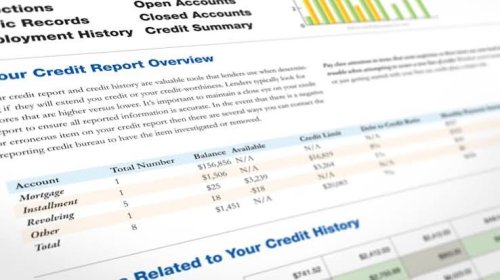
Review both credit reports
Each spouse should obtain and review reports from Equifax, Experian, and TransUnion.
The federally authorized report service allows consumers to request their reports, and CFPB notes that additional free online access may also be available.
Look for:
- Accounts that do not belong to you
- Incorrect late payments
- Wrong balances
- Duplicate debts
- Closed accounts shown as open
- Authorized-user classification errors
- Joint accounts one spouse forgot about
- Identity theft
- Incorrect addresses
Compare scores carefully
Record:
- Score model
- Credit bureau
- Calculation date
- Score range
- Main score factors
Do not compare two numbers without checking whether they use the same bureau and model.
List every monthly debt
Include:
- Mortgage or rent
- Vehicle loans
- Student loans
- Credit card minimums
- Personal loans
- Child support or maintenance obligations
- Other recurring debts
Compare individual and joint scenarios
Ask prospective lenders to explain:
- Expected terms if both spouses apply
- Expected terms if the stronger borrower applies alone
- Whether the individual income is sufficient
- Whether the non-applicant spouse’s information is still required
- Whether community-property rules apply
- Whether the same loan programs remain available
Avoid unnecessary new accounts
Opening new credit shortly before a major loan may add inquiries and accounts that change the underwriting picture. CFPB advises applying only for credit that is needed and avoiding frequent new applications.
Sample Financial Discussion for Couples
Before applying jointly, discuss:
- What are our current credit scores and which models produced them?
- Have we reviewed all three reports?
- Which debts are separate and which are shared?
- Do either of us have late payments, collections, or errors?
- How much monthly debt does each person carry?
- Do we need both incomes to qualify?
- Could the stronger applicant qualify alone?
- What interest-rate difference would an individual application create?
- Who will be responsible for future payments?
- What happens if one person loses income?
- How will we monitor shared accounts?
- What happens to joint debts after separation?
Discussing these questions before signing is safer than discovering the answers after a payment problem.
What If Your Spouse’s Account Is Incorrectly Listed on Your Report?
Dispute the error when:
- You never opened the account
- You never signed jointly
- You were not an authorized user
- You were removed but incorrect reporting continues
- You are marked as a joint owner instead of an authorized user
- The balance or payment history is wrong
- The account belongs to someone with a similar name
- Identity theft occurred
Send the dispute to:
- The credit reporting company displaying the account
- The bank, lender, card issuer, collector, or other furnisher that reported it
Explain the exact error and include supporting documentation. CFPB recommends contacting both the bureau and furnisher rather than relying on only one dispute.
Sample Credit Report Dispute Letter
Subject: Incorrect Spousal or Joint Account Reporting
Dear [Credit Reporting Company or Creditor],
I am disputing inaccurate information concerning the following account:
Creditor: [Creditor name]
Account number: [Last four digits]
Credit report number: [Report number]
The account is currently reported as:
[Individual account / joint account / co-signed account / authorized-user account]
This classification is inaccurate because:
[Explain that the account belongs only to your spouse, you never applied jointly, you were only an authorized user, or another specific error.]
The correct account responsibility should be:
[State the correct status.]
Attached are copies of:
- The relevant credit report page
- Account agreement or application
- Creditor correspondence
- Confirmation of authorized-user removal
- Identification documents
- Other supporting evidence
Please investigate and correct or remove information that is inaccurate, incomplete, or unverifiable.
Please send me the written investigation results and an updated copy of my report.
Sincerely,
[Full name]
[Address]
[Date]
Common Marriage and Credit Myths
Myth 1: Marriage combines two credit scores
False. Each spouse’s score is calculated from that individual’s credit history.
Myth 2: Your spouse’s old bad credit automatically lowers your score
False. Separate negative accounts do not automatically transfer merely because of marriage.
Myth 3: Joint loan applications use only the higher score
Not necessarily. Lenders evaluating joint applications generally review both applicants, and one poor profile may affect approval and terms.
Myth 4: Each spouse owes only half of a joint card
Generally false. Each joint cardholder may be responsible for the entire balance.
Myth 5: Authorized users and joint holders are the same
False. An authorized user usually has permission to use an account without the same contractual repayment responsibility as a joint holder.
Myth 6: Divorce removes a borrower from joint debt
False. The creditor may continue collecting from anyone who remains contractually responsible unless the creditor releases that person or the debt is refinanced or paid.
Myth 7: A qualified married applicant must include a spouse
Generally false. A creditworthy applicant may normally seek individual credit, subject to legitimate exceptions involving income, collateral, and state law.
Official Consumer Resources
- CFPB guidance explaining whether a spouse’s bad score affects your personal score.
- CFPB guidance on joint credit card accounts and both spouses’ scores.
- CFPB guidance on obtaining credit individually while married.
- CFPB explanation of responsibility for joint credit card charges.
- CFPB guidance concerning joint debts after divorce.
- CFPB resources for understanding and rebuilding credit.
- CFPB instructions for obtaining free credit reports.
Final Checklist
Before applying for credit with a spouse:
- Obtain both spouses’ credit reports
- Check scores from comparable sources
- Identify separate and joint accounts
- Correct report errors
- Review monthly debt obligations
- Determine whether both incomes are needed
- Compare individual and joint application terms
- Ask how the lender evaluates two scores
- Confirm whether community-property rules apply
- Understand who becomes legally responsible
- Avoid unnecessary new applications
- Keep shared balances manageable
- Set automatic payment reminders
- Monitor all joint accounts
- Keep copies of loan agreements
- Do not assume divorce removes joint liability
- Request written confirmation of any borrower release
Bottom Line
Your spouse’s bad credit score does not directly lower your personal credit score. Marriage does not automatically combine your credit histories or create one shared score.
However, your spouse’s credit can significantly affect shared financial plans.
When you apply jointly, lenders may review both applicants’ reports and scores. One spouse’s poor credit may lead to a higher interest rate, less favorable terms, a reduced loan amount, or denial. Joint credit cards, mortgages, vehicle loans, and co-signed debts can affect both reports because both people are connected to the obligation.
Applying under the stronger borrower alone may sometimes produce better terms, but that person must usually qualify using the income, debts, credit, and assets available under the lender’s rules. Spousal information may still be relevant in certain community-property or collateral situations.
Before borrowing together, review both credit reports, correct errors, compare individual and joint options, and understand exactly who will be legally responsible. A shared financial goal does not require ignoring separate credit risks.
FAQ
Does my spouse’s bad credit lower my credit score?
No. Your spouse’s separate credit history does not directly change your individual score merely because you are married.
Do married couples have a joint credit score?
No. Each spouse continues to have individual credit scores calculated from that person’s report information.
Will my spouse’s collections appear on my credit report?
Not solely because of marriage. They may appear if you share legal responsibility, co-signed, jointly opened the account, or the information was reported incorrectly.
Can my spouse’s bad credit affect our mortgage?
Yes. When both spouses apply, the lender may review both credit profiles, and the weaker profile may affect approval, rate, and terms.
Can the spouse with better credit apply alone?
Possibly. The individual applicant must qualify under the lender’s income, debt, credit, asset, and property rules. CFPB notes that an individual application may sometimes produce better terms.
Can I use my spouse’s income without adding them to the loan?
That depends on the credit product, ownership of the income or assets, state law, and lender requirements. The lender may require additional documentation or signatures when repayment relies on another person’s income.
Does a joint credit card affect both scores?
Yes. Joint credit card activity can affect both account holders’ credit scores.
Am I responsible for charges my spouse makes on a joint card?
Generally, yes. Either joint holder may be responsible for the entire account balance.
Is an authorized user responsible for the balance?
An authorized user is generally not contractually responsible in the same way as a joint account holder, although the account may appear on the authorized user’s credit report.
Can adding my spouse as an authorized user help their score?
It may help when the account has positive history and low utilization, but it can also hurt if the account has high balances or missed payments. No result is guaranteed.
Does divorce remove joint accounts from my credit report?
No. A divorce decree does not automatically change the creditor’s contract or remove either borrower from joint debt.
Can a lender require my spouse to co-sign?
A lender generally cannot require a qualified individual applicant’s spouse to become responsible merely because they are married. Exceptions can involve collateral, spouse-provided income, or community-property law.
What should I do if my spouse’s account appears incorrectly on my report?
Dispute it with the credit reporting company and the creditor or other business that supplied the information. Include documents showing the correct account responsibility.
Share
What's Your Reaction?
 Like
0
Like
0
 Dislike
0
Dislike
0
 Love
0
Love
0
 Funny
0
Funny
0
 Angry
0
Angry
0
 Sad
0
Sad
0
 Wow
0
Wow
0